I feel like thats a little bit of a simplification/anthropomorphization (which is fine obviously, its a theadiverse comment not a research paper, I just think this subject is interesting and am taking an excuse to talk about it :)
Generally prey drive is an aspect of play for animals. Most animals, especially animals domesticated for hunting related tasks like pest control, enjoy hunting and would benefit from hunting recreationally even if they were provided food. Its part of cat’s ecological niche to hunt for food, it fulfills a psychological need not just a physiological one (which is why providing your animals with enrichment is very important. Please consider your animals’ psychological needs and play with, exercise and enrich them). Dogs with high prey drive are the same way.
Cats aren’t really uniquely sadistic, there just aren’t many examples of domesticated animals with high prey drive that have all their meals provided for them AND have the ability to free roam.
If you fenced in an big area and left greyhounds (another high prey drive domesticated animal) in it while giving them enough food, they would 1000% hunt and kill bunnies, squirels, etc well beyond what would ever make sense for them to eat. Both cats and greyhounds are animals who’s ecological niche became even more hunting-centric as a product of domestication-- cats being used for rodent control, and greyhounds for hunting small game as sighthounds.
Bettas in aquaria will still form bubble nests even if they have no mates (and also hunt for anything and everything they can put in their mouth if you have a food web in your aquarium, even if you feed them adequate prepared foods, depending on their temperment). Schooling fish will school even when there are no threats, though more loosely. Animals that hunt will still want to even if their food needs are met. Performing their ecological niche and evolutionary strategy is biological fulfilment for animals and its the gold standard of enrichment for animals in captivity because it fills a psychological need.

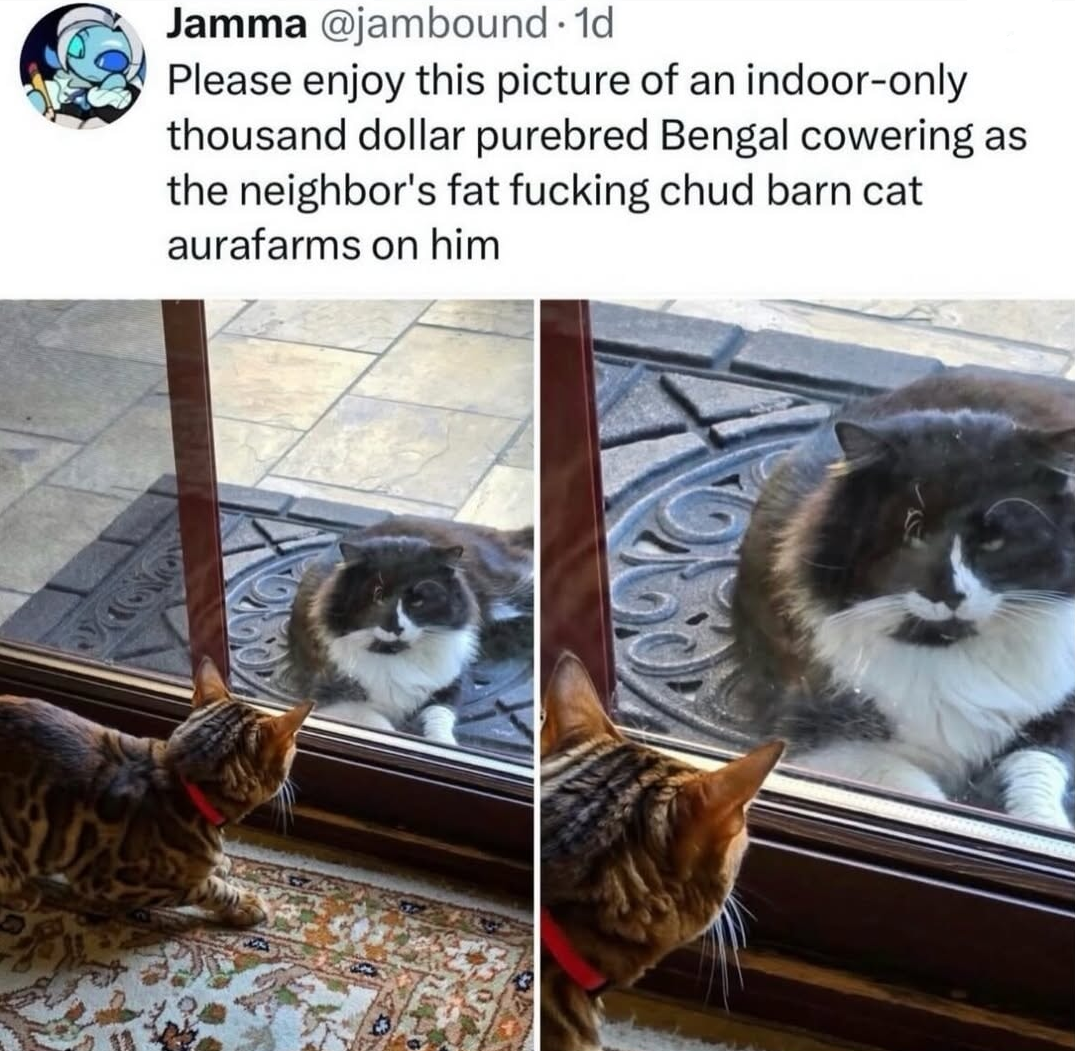
also unlike most predators, they don’t even do it to eat. They just get off on catching and torturing other animals.
(EDIT well excuuuse me for not dressing it up in a bunch of academic speech that essentially adds up to the same thing)
I feel like thats a little bit of a simplification/anthropomorphization (which is fine obviously, its a theadiverse comment not a research paper, I just think this subject is interesting and am taking an excuse to talk about it :)
Generally prey drive is an aspect of play for animals. Most animals, especially animals domesticated for hunting related tasks like pest control, enjoy hunting and would benefit from hunting recreationally even if they were provided food. Its part of cat’s ecological niche to hunt for food, it fulfills a psychological need not just a physiological one (which is why providing your animals with enrichment is very important. Please consider your animals’ psychological needs and play with, exercise and enrich them). Dogs with high prey drive are the same way.
Cats aren’t really uniquely sadistic, there just aren’t many examples of domesticated animals with high prey drive that have all their meals provided for them AND have the ability to free roam.
If you fenced in an big area and left greyhounds (another high prey drive domesticated animal) in it while giving them enough food, they would 1000% hunt and kill bunnies, squirels, etc well beyond what would ever make sense for them to eat. Both cats and greyhounds are animals who’s ecological niche became even more hunting-centric as a product of domestication-- cats being used for rodent control, and greyhounds for hunting small game as sighthounds.
Bettas in aquaria will still form bubble nests even if they have no mates (and also hunt for anything and everything they can put in their mouth if you have a food web in your aquarium, even if you feed them adequate prepared foods, depending on their temperment). Schooling fish will school even when there are no threats, though more loosely. Animals that hunt will still want to even if their food needs are met. Performing their ecological niche and evolutionary strategy is biological fulfilment for animals and its the gold standard of enrichment for animals in captivity because it fills a psychological need.
It’s like people on social media. Not here to have a healthy debate based on facts and getting off on insults and hate.
It’s lovely, is it not?