The BBC is incredibly clever government propaganda that can claim independence and impartiality whilst simultaneously acting in deference to the government position.
Mid-1925 found the future of broadcasting under further consideration, this time by the Crawford committee. By now the BBC, under Reith’s leadership, had forged a consensus favouring a continuation of the unified (monopoly) broadcasting service, but more money was still required to finance rapid expansion. Wireless manufacturers were anxious to exit the loss-making consortium, and Reith was keen that the BBC be seen as a public service rather than a commercial enterprise. The recommendations of the Crawford Committee were published in March the following year and were still under consideration by the GPO when the 1926 United Kingdom general strike broke out in May. The strike temporarily interrupted newspaper production, and with restrictions on news bulletins waived, the BBC suddenly became the primary source of news for the duration of the crisis.[15]: 117
The crisis placed the BBC in a delicate position. On the one hand Reith was acutely aware that the government might exercise its right to commandeer the BBC at any time as a mouthpiece of the government if the BBC were to step out of line, but on the other he was anxious to maintain public trust by appearing to be acting independently. The government was divided on how to handle the BBC, but ended up trusting Reith, whose opposition to the strike mirrored the PM’s own. Although Winston Churchill in particular wanted to commandeer the BBC to use it “to the best possible advantage”, Reith wrote that Stanley Baldwin’s government wanted to be able to say “that they did not commandeer [the BBC], but they know that they can trust us not to be really impartial”.[22] Thus the BBC was granted sufficient leeway to pursue the government’s objectives largely in a manner of its own choosing. Supporters of the strike nicknamed the BBC the BFC for British Falsehood Company. Reith personally announced the end of the strike which he marked by reciting from Blake’s “Jerusalem” signifying that England had been saved.[23]
While the BBC tends to characterise its coverage of the general strike by emphasising the positive impression created by its balanced coverage of the views of government and strikers, Seaton has characterised the episode as the invention of “modern propaganda in its British form”.[15]: 117 Reith argued that trust gained by ‘authentic impartial news’ could then be used. Impartial news was not necessarily an end in itself.[15]: 118
The BBC did well out of the crisis, which cemented a national audience for its broadcasting, and it was followed by the Government’s acceptance of the recommendation made by the Crawford Committee (1925–26) that the British Broadcasting Company be replaced by a non-commercial, Crown-chartered organisation: the British Broadcasting Corporation.[20]
John Reith and the BBC, with support from the Crown, determined the universal needs of the people of Britain and broadcast content according to these perceived standards.[30] Reith effectively censored anything that he felt would be harmful, directly or indirectly.[31] While recounting his time with the BBC in 1935, Raymond Postgate claims that BBC broadcasters were made to submit a draft of their potential broadcast for approval. It was expected that they tailored their content to accommodate the modest, church-going elderly or a member of the Clergy.[32] Until 1928, entertainers broadcasting on the BBC, both singers and “talkers” were expected to avoid biblical quotations, Clerical impersonations and references, references to drink or Prohibition in the United States, vulgar and doubtful matter and political allusions.[31] The BBC excluded popular foreign music and musicians from its broadcasts, while promoting British alternatives.[33] On 5 March 1928, Stanley Baldwin, the Prime Minister, maintained the censorship of editorial opinions on public policy, but allowed the BBC to address matters of religious, political or industrial controversy.[34] The resulting political “talk series”, designed to inform England on political issues, were criticised by members of parliament, including Winston Churchill, David Lloyd George and Sir Austen Chamberlain. Those who opposed these chats claimed that they silence the opinions of those in Parliament who are not nominated by Party Leaders or Party Whips, thus stifling independent, non-official views.[34] In October 1932, the policemen of the Metropolitan Police Federation marched in protest at a proposed pay cut. Fearing dissent within the police force and public support for the movement, the BBC censored its coverage of the events, only broadcasting official statements from the government.[34]
Throughout the 1930s political broadcasts had been monitored by the BBC.[35] In 1935, the BBC censored the broadcasts of Oswald Mosley and Harry Pollitt.[34] Mosley was a leader of the British Union of Fascists, and Pollitt a leader of the Communist Party of Great Britain. They were contracted to provide a series of five broadcasts on their parties’ politics. The BBC, in conjunction with The Foreign Office of Britain, suspended this series and ultimately cancelled it without the notice of the public.[35][34] Some politicians faced censorship. In 1938, Winston Churchill proposed a series of talks regarding British domestic and foreign politics and affairs but was censored.[35] The censorship of political discourse by the BBC started the shutdown of the political debate that manifested over the BBC’s wartime airwaves.[35] The Foreign Office maintained that the public should not be aware of their role in the censorship.[34]


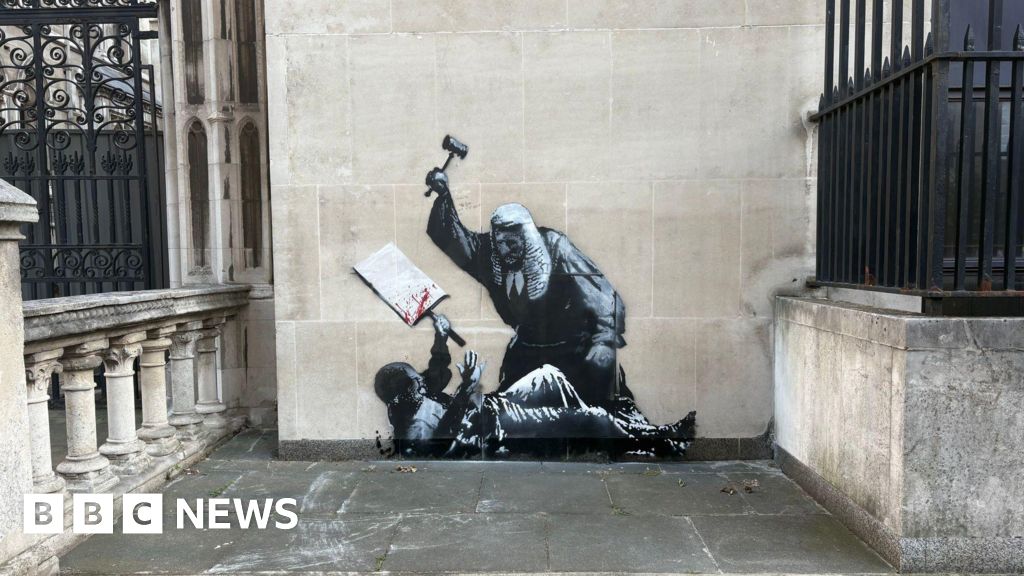
It’s really sad to see the BBC reduced to a mouthpiece for those in power. Older people will remember that it wasn’t always that way.
Always has been 🌎🧑🚀🔫🧑🚀
The BBC is incredibly clever government propaganda that can claim independence and impartiality whilst simultaneously acting in deference to the government position.
https://en.wikipedia.org/wiki/BBC#History
It goes on and on about more censorship and manipulation but I’m sure what I’ve quoted gets the idea across.
And of course there’s:
https://en.wikipedia.org/wiki/BBC#Controversies
https://en.wikipedia.org/wiki/Criticism_of_the_BBC
https://en.wikipedia.org/wiki/BBC_controversies
https://en.wikipedia.org/wiki/BBC_independence
https://en.wikipedia.org/wiki/BBC#MI5_vetting_policy
The ruling class don’t like criticism for all to see.