- 4 Posts
- 29 Comments


Someone couldn’t just be trying to be funny after they’ve gone vegan?
Someone couldn’t just be trying to be funny after they’ve gone vegan?
Important to note: “grass-fed” doesn’t actually mean grass-fed, they use plenty of supplemental grain almost everywhere. Trying to scale a pure grass-fed system up works rather poorly and even increases methane emissions
We model a nationwide transition [in the US] from grain- to grass-finishing systems using demographics of present-day beef cattle. In order to produce the same quantity of beef as the present-day system, we find that a nationwide shift to exclusively grass-fed beef would require increasing the national cattle herd from 77 to 100 million cattle, an increase of 30%. We also find that the current pastureland grass resource can support only 27% of the current beef supply (27 million cattle), an amount 30% smaller than prior estimates
[…]
If beef consumption is not reduced and is instead satisfied by greater imports of grass-fed beef, a switch to purely grass-fed systems would likely result in higher environmental costs, including higher overall methane emissions. Thus, only reductions in beef consumption can guarantee reductions in the environmental impact of US food systems.
https://iopscience.iop.org/article/10.1088/1748-9326/aad401
Cropland use goes down on plant-based diets, so we don’t need all land to be usable for crops
we show that plant-based replacements for each of the major animal categories in the United States (beef, pork, dairy, poultry, and eggs) can produce twofold to 20-fold more nutritionally similar food per unit cropland. Replacing all animal-based items with plant-based replacement diets can add enough food to feed 350 million additional people, more than the expected benefits of eliminating all supply chain food loss.
That seems just like a strange interpenetration to me, like the point is that is should be theirs?
For the plants part, it’s worth mentioning that it takes more plants for animal products than it does to eat them directly
1 kg of meat requires 2.8 kg of human-edible feed for ruminants and 3.2 for monogastrics
https://www.sciencedirect.com/science/article/abs/pii/S2211912416300013
Perhaps counterintuitively, it’s the other way around. Meat, dairy, etc. production is what does not scale well. Low income countries don’t have nearly as much of it because high income countries have to subsidize the hell out of animal farming to make it as common as it is. It actually takes significantly less plant farming to eat plants directly
we show that plant-based replacements for each of the major animal categories in the United States (beef, pork, dairy, poultry, and eggs) can produce twofold to 20-fold more nutritionally similar food per unit cropland. Replacing all animal-based items with plant-based replacement diets can add enough food to feed 350 million additional people, more than the expected benefits of eliminating all supply chain food loss.
https://www.pnas.org/doi/abs/10.1073/pnas.1713820115
Pesticide and fertilizer use is significantly lower
To produce 1 kg of protein from kidney beans required approximately eighteen times less land, ten times less water, nine times less fuel, twelve times less fertilizer and ten times less pesticide in comparison to producing 1 kg of protein from beef
https://pubmed.ncbi.nlm.nih.gov/25374332/
Even if we maximally used manure, it’s still lower
Thus, shifting from animal to plant sources of protein can substantially reduce fertilizer requirements, even with maximal use of animal manure
https://www.sciencedirect.com/science/article/abs/pii/S0921344922006528
For transport, it’s actually not the driver of food emissions. The production itself is more important, especially when it comes to animal products
Transport is a small contributor to emissions. For most food products, it accounts for less than 10%, and it’s much smaller for the largest GHG emitters. In beef from beef herds, it’s 0.5%. Not just transport, but all processes in the supply chain after the food left the farm – processing, transport, retail and packaging – mostly account for a small share of emissions. This data shows that this is the case when we look at individual food products. But studies also shows that this holds true for actual diets; here we show the results of a study which looked at the footprint of diets across the EU. Food transport was responsible for only 6% of emissions, whilst dairy, meat and eggs accounted for 83%.
I think this is missing the point? None of that is a moral justification?
The American South has already plumbed the depths of “humans as livestock.” It was just missing modern, industrial equipment.
Which very notably become morally apposed by an increasingly larger and larger group at the time and we now think of horrific
As they scale up, the costs will be lower. It’s a supply chain thing, not a fundamental limitation. The input costs are lower. In the broader sense, plant-based diets from whole-foods are actually already cheaper
It found that in high-income countries:
• Vegan diets were the most affordable and reduced food costs by up to one third.
• Vegetarian diets were a close second.
• Flexitarian diets with low amounts of meat and dairy reduced costs by 14%.
• By contrast, pescatarian diets increased costs by up to 2%.
https://www.ox.ac.uk/news/2021-11-11-sustainable-eating-cheaper-and-healthier-oxford-study
This is also true in real spending data
Based on primary data (n = 1040) collected through an online survey, representative of the Portuguese population, through logistic regressions, it was possible to conclude that plant-based consumers, particularly vegan, are associated with lower food expenditures compared to omnivorous consumers. In fact, plant-based consumers are shown to spend less than all other consumers assessed
https://agrifoodecon.springeropen.com/articles/10.1186/s40100-022-00224-9
Compared to meat eaters, results show that “true” vegetarians do indeed report lower food expenditures
https://www.sciencedirect.com/science/article/abs/pii/S0921800915301488?via=ihub (looking at the US)
EDIT: I should also note that in an increasing list of countries, non-whole plant-based things like this are already cheaper too. With meat prices rising further, that’s only likely to increase more
That’s not true. It’s a little less bioavaliable, but hardly “almost not” and the bioavaliable improves with more Vitamin C (which you also get from plants)
This is kind of an industry wide thing that’s more than just Tyson, I should note
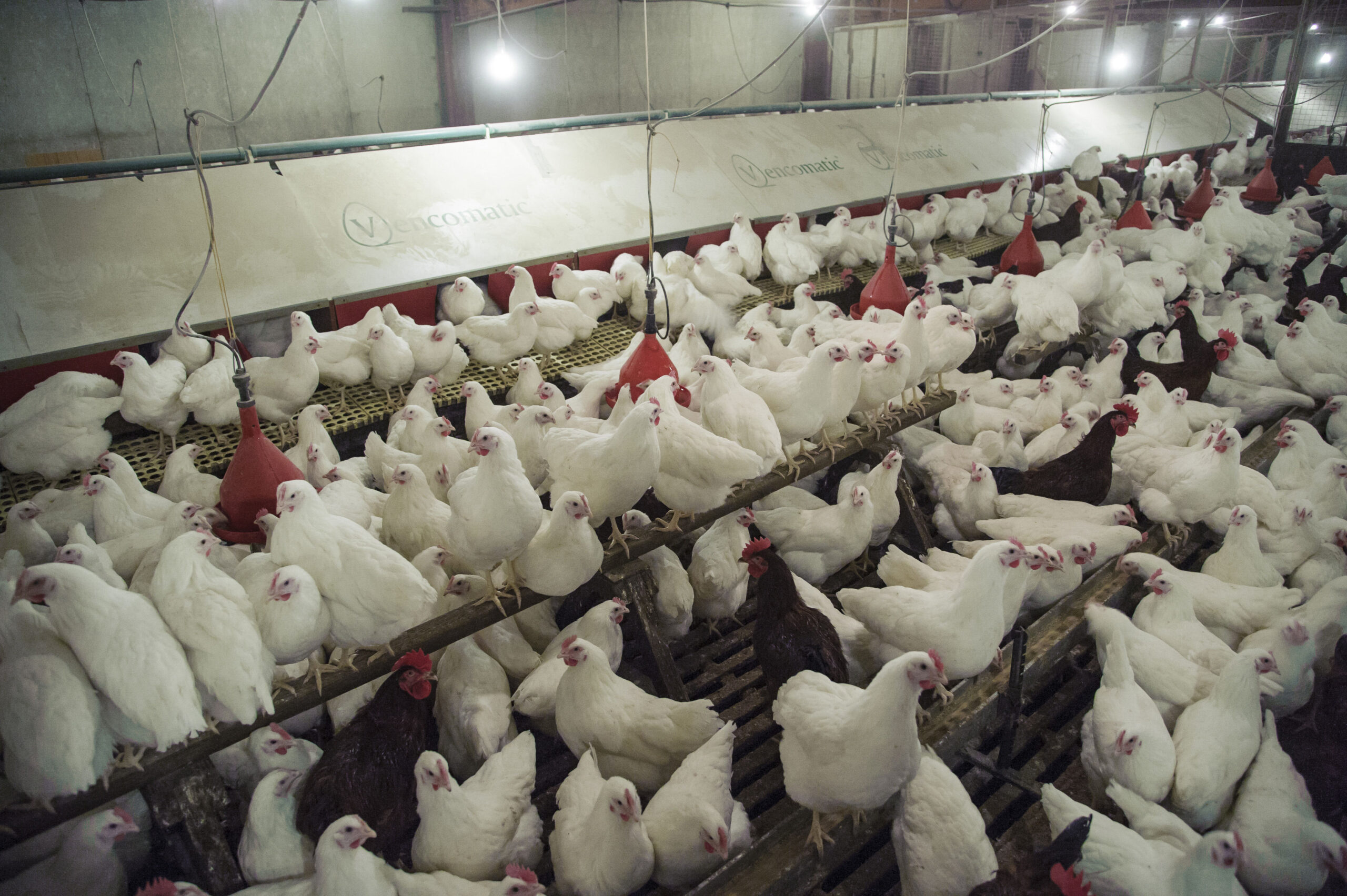
Lying about what a label means? That would be crazy
Bringing up a Tyson competitor, the farm manager wonders how other poultry companies handle supposedly free-range-raised chickens. The short answer: They don’t, really.
“Those birds don’t go outside — you know that,” the technician replies. “They don’t all go out … Look that up online.”
The manager chimes in: “It’s not like they make it like all of ’em come out and enjoy the sun.”
“That is strictly for commercial [advertising] purposes,” the technician says.
[…]
In 2017, the Intercept reported an investigation into a dozen California farms owned by a free-range chicken company that found no evidence of any animals spending any time outdoors. The chief animal care officer for Perdue Farms, a major chicken producer, has even said the vast majority of its free-range chickens stay indoors.
I more so meant the killing for consumption part. The cultures that did that were not exactly intentionally killing them to eat them like we are with non-human animals
No, no it’s fine they were free-range, cage-free and organic humans /s
There is also plenty of non-heme iron, to be fair, which is not from blood. Plants have tons of it from the ground and such
Heme iron, specifically in animals, is in fact from blood. Heme being short for hemoglobin which is the protein in red blood cells that transfers oxygen around the body (both for humans and most non-human animals). Being able to make that from precision fermentation is pretty cool
I should note that technology is increasingly helping provide more options. With precision fermentation, there is a lot of ways to biologically identical proteins, enzymes, etc. For instance, you can now buy non-animal whey protein, egg white protein, non-animal heme iron, and more in the stores. It’s super cool stuff and ironically the dairy industry was a big pioneer of it in the 90s for one of the enzymes they use widely in cheese. There’s a lot more coming down the pipeline with it
I meant within this conversation. The options you presented did not include that and made a false claim on my beliefs
I understanding that everything I say is being distorted through the lens of anger, but please don’t make the worst interpretations of what I am saying
I want you to vision the future you want to see. If the future in your vision is, at minimum, a world without factory farming, that’s going to require massive decreases in animal product consumption and production. That’s going to take require action from all of us to get there
The evidence is pretty weak for plants, but even it that were true, it takes more plants to produce animal products than it does to eat plants. If we are concerned about plant death, it’s happen even more for animal products
1 kg of meat requires 2.8 kg of human-edible feed for ruminants and 3.2 for monogastrics
https://www.sciencedirect.com/science/article/abs/pii/S2211912416300013
There’s another option you never considered: reducing consumption and reduction. I would very much say reducing consumption is a step toward a better world. I’m not going to tell someone there efforts are wasted if they’re doing that, I’m going to encourage them to keep going further
We were talking about how dominant factory farming is, and how things that try not to do that do not scale. The response to that was to ignore this and throw up hands and say “eh, guess we can’t do anything”. Am I’m supposed to instead assume that one has to eat meat and ignore that we don’t have to?


Sidebar: Something most people don’t realize is that both will probably be killed at the end of the experiment :(
This is what usually happens after every experiment no matter if they survive the experiment or not