Nostalgia is a form of blindness. You did not feel the way you remember. There are not as many new ways to feel as you get older, but children have not had enough time to feel the full gamut of their emotions.
But nostalgia isn’t limited to things from childhood right? I get nostalgic for things I experienced as a fully grown adult. Often things in media, like tv shows, music, games.
I can confirm that stuff was much more exciting in my 30’s than it is now I’m in my 50’s, but was more exciting still when I was a kid. The reason for me is partly that there were so many things I could experience for the first time, combined with a general sense of optimism and endless possibility about what could happen in the future. The world was full of unknowns that have gradually become known, which is comparatively dull.
I guess a lot of younger people today might not feel that same sense of optimism, since it was largely connected to hopes about where technology and social development might take us, and if the last decade or two is anything to go by, it doesn’t look so promising.
I would say its rooted in our tendency to reminisce over positive emotions instead of negative ones. I think people get especially nostalgic about childhood because your emotions as a child are just more raw, both positive and negative.
I take issue with how trauma is framed in modern pop-psychology. The guidance we receive from our negative emotions is incredibly useful and framing it as being similar to recovering from a wound is misleading. I’m not trying to belittle people who have had traumatic experiences when I say that, how you feel about things that have happened to you really matters. They way you respond to these events almost defines you as a person, and having poor coping mechanisms will hurt you further. But bad experiences are inevitable, and treating them with taboo limits our ability to see out of ourselves and understand our situations with clarity.

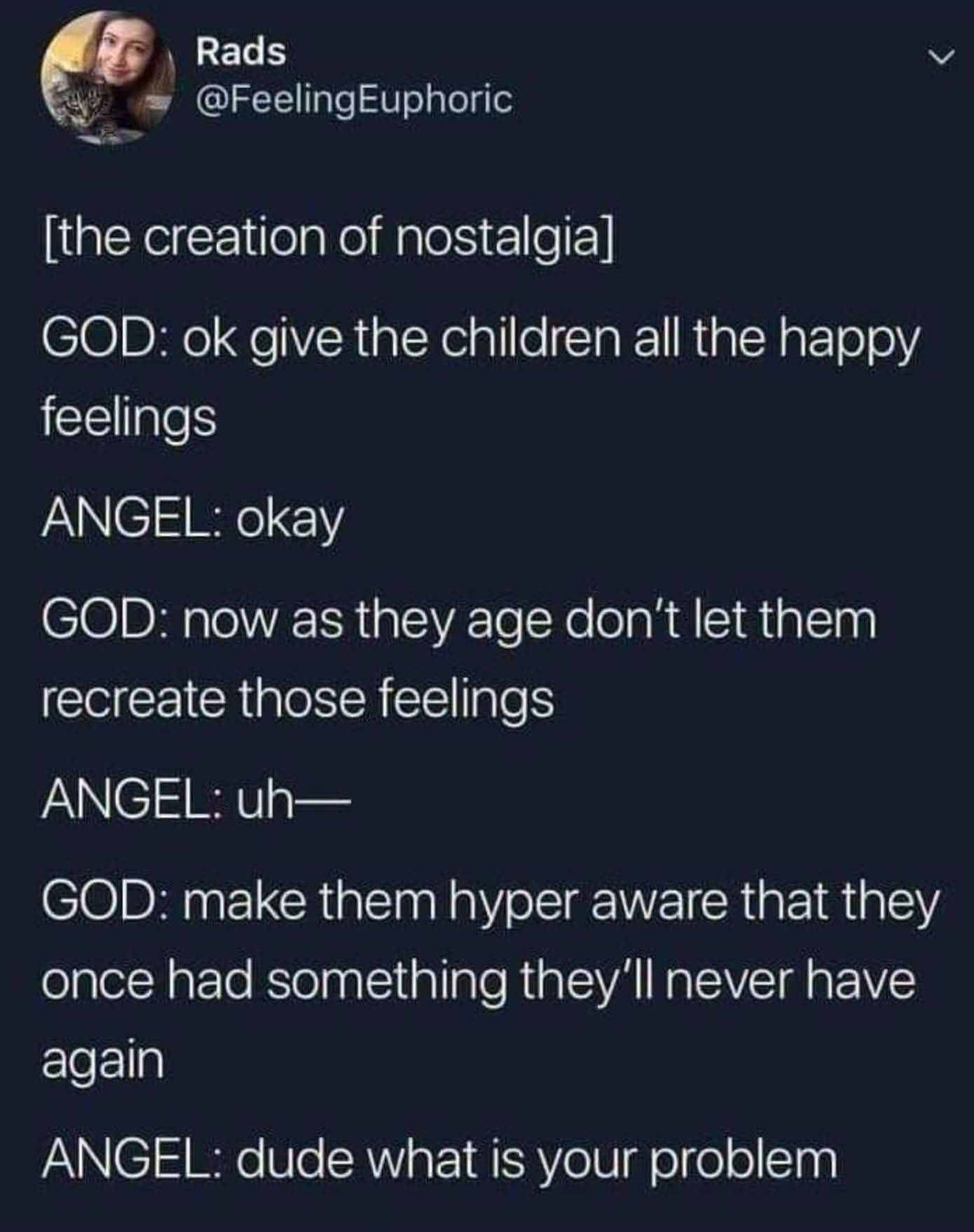
Nostalgia is a form of blindness. You did not feel the way you remember. There are not as many new ways to feel as you get older, but children have not had enough time to feel the full gamut of their emotions.
Enter: adults of traumatic childhoods who only feel one terrifying way no matter what’s going on in their lives
But nostalgia isn’t limited to things from childhood right? I get nostalgic for things I experienced as a fully grown adult. Often things in media, like tv shows, music, games.
I can confirm that stuff was much more exciting in my 30’s than it is now I’m in my 50’s, but was more exciting still when I was a kid. The reason for me is partly that there were so many things I could experience for the first time, combined with a general sense of optimism and endless possibility about what could happen in the future. The world was full of unknowns that have gradually become known, which is comparatively dull.
I guess a lot of younger people today might not feel that same sense of optimism, since it was largely connected to hopes about where technology and social development might take us, and if the last decade or two is anything to go by, it doesn’t look so promising.
I would say its rooted in our tendency to reminisce over positive emotions instead of negative ones. I think people get especially nostalgic about childhood because your emotions as a child are just more raw, both positive and negative.
We remenice about our positive emotions. The negative ones become encoded in our behaviors as trauma responses.
I take issue with how trauma is framed in modern pop-psychology. The guidance we receive from our negative emotions is incredibly useful and framing it as being similar to recovering from a wound is misleading. I’m not trying to belittle people who have had traumatic experiences when I say that, how you feel about things that have happened to you really matters. They way you respond to these events almost defines you as a person, and having poor coping mechanisms will hurt you further. But bad experiences are inevitable, and treating them with taboo limits our ability to see out of ourselves and understand our situations with clarity.
Oh, I reminice over negative emotions too