

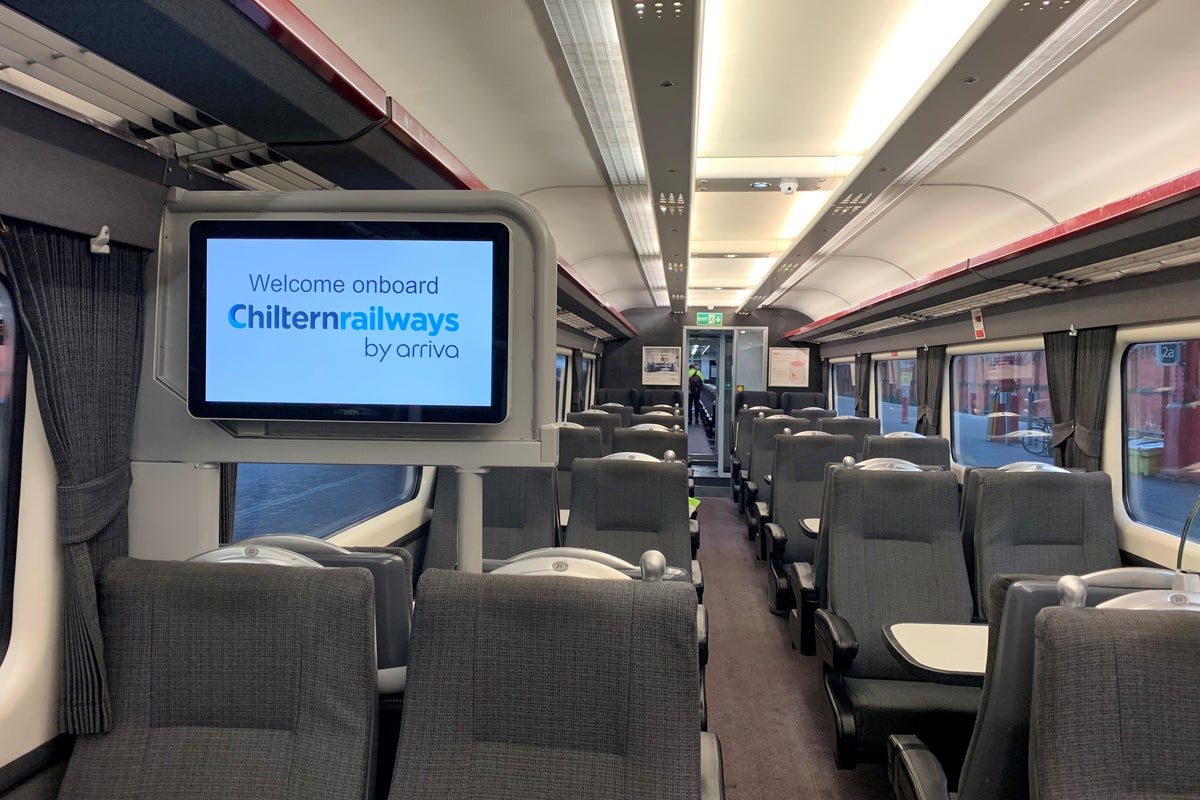
Chiltern Railways’ services became the latest to transition into public ownership on Sunday, marking the sixth train operator to be nationalised by the Government.
The UK’s largest train operator, Govia Thameslink Railway, alongside c2c, Greater Anglia, South Western Railway, and West Midlands Trains, have already been brought into public ownership by the Government.
From December, the Department for Transport (DfT) confirmed that 25 additional daily Chiltern Railways services will be introduced to help tackle “overcrowding”, delivering 10,000 extra seats during each weekday. This plan incorporates half-hourly weekday trains running along the Chiltern main line between London and Birmingham, as well as an increase in weekend journeys.
Questioning motives is always reasonable, but concluding that their motives are evil is not justified here (i.e. the answer to the question cannot reasonably be a conclusive “it’s evil”), because the claim that you are then making is ridiculous.
Serious economists who stand to gain little-to-nothing from espousing right-wing economic policy have pushed for privatisation for decades - opposed, of course, by many serious economists who espouse left-wing economic policy.
The “evil motivations” conclusion either has to accuse all those economists of being evil (for what gain, we do not know) or it has to claim that a person’s motivations for putting forward right-wing economic views is entirely inexplicably ceases to be “honest but misguided” and becomes “dishonest and self-serving” in perfect correlation with what they stand to gain. That’s not reasonable: if it’s possible for someone to honestly hold an opinion, the mere presence of them having something to gain from that opinion doesn’t turn it dishonest.
This is before we get to actually assessing whether politicians actually stood to gain much from privatisation. John Major, for example, who oversaw rail privatisation, was born to a middle class family that later fell on hard times. He wasn’t born with a silver spoon in his mouth and attending parties with bankers. That brief analysis can’t tell you everything about his motivations, but it should make it more realistic that his sympathies lie more with ordinary people than with the ultra-rich, even though he oversaw policies which we know, or at least believe and can argue for, hurt ordinary people.