

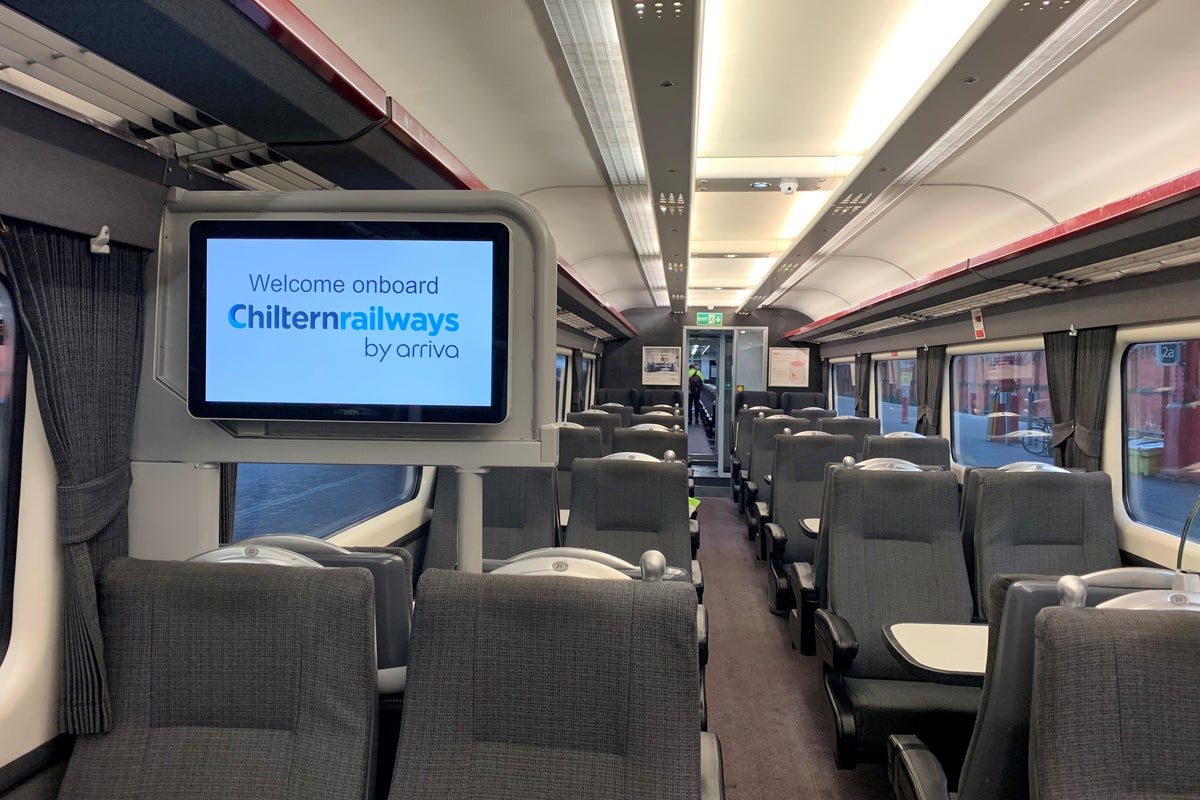
Chiltern Railways’ services became the latest to transition into public ownership on Sunday, marking the sixth train operator to be nationalised by the Government.
The UK’s largest train operator, Govia Thameslink Railway, alongside c2c, Greater Anglia, South Western Railway, and West Midlands Trains, have already been brought into public ownership by the Government.
From December, the Department for Transport (DfT) confirmed that 25 additional daily Chiltern Railways services will be introduced to help tackle “overcrowding”, delivering 10,000 extra seats during each weekday. This plan incorporates half-hourly weekday trains running along the Chiltern main line between London and Birmingham, as well as an increase in weekend journeys.
I feel confident one can change incentives and operational practices without privatizing.
Some people are delusional but I’m not sure the value of spending a lot of time in their shoes. In the US many people fervently believe the Republicans are “better at the economy” despite evidence pointing otherwise.
This seems like an inefficient way to share public wealth that gives advantage to the wealthy. Let’s say you’re correct and the value of the shares goes from 10 to 100. People who bought more shares profit more. People with more money on hand can buy more shares. It’s a large advantage to the wealthy.
As you said
So it sounds like we agree? Privatizing advantages the bigger, wealthier, investors.
What I disagreed with is that the belief was mad. You’ve just explained a lot of ways that the belief was wrong not that it was mad. We agree that it was wrong, so this didn’t do anything to convince me that it was mad, and I still don’t agree with that.
If I’ve understood this line of argument, you’re raising objections to privatisation, and then concluding “since privatisation is a bad idea, anyone who believes it’s a good idea must be mad.” Do correct me if this is not your logic.
If it is then it’s unsound in a way that I see repeated again and again on Lemmy: people who disagree with you on one thing tend to also disagree with you on other things. Specifically, someone who thinks privatisation is a good idea, does not (or did not) agree that any of the arguments you raised were sufficiently strong. It would be mad to continue to think that privatisation is a good idea if you agree with the arguments you made against it.
But merely disagreeing with your arguments is not mad. Just wrong.
Ah I see. I’m not sure where the line is between “merely wrong” and “mad”.
Like, if you tell me the population of London is 5 million, that’s wrong but plausible. If you tell me it’s twelve people that’s absurd.
So when I look at privatization I can’t see any path where it works out for the majority of people that isn’t entirely wishful thinking. There’s no mechanism where private ownership of public resources and infrastructure works out in the long term. Believing in it seems so egregiously wrong it’s another category. Like someone believing that letting the foxes watch the hens will yield more eggs. There’s no good reasons to believe that, but plenty of Fox written propaganda.
Though I am sort of backed into a corner in that I was sort of firing from the hip. I don’t have the most robust argument for my “maybe written on the toilet” posts. “Mad” might not be the best word. “Foolish and poorly informed” maybe?
I think “foolish and poorly informed” is a lot more sustainable than “mad” for sure. The latter I think is what leads people to believe this cynical stuff that anyone arguing for that kind of stuff is a bad actor.
But I think you can learn a lot by reading the actual opinions of intellectuals - in this case economists - who fervently believe in the effectiveness of free-market capitalism. My own take is that it’s less “foolish and poorly informed” and more “prioritising other evidence/arguments/preconceptions.”