For those that don’t know why, cats are very capable hunters and absolutely decimate bird populations. Keeping cats outdoors has genuinely horrendous ecological consequences unfortunately :/
Edit: this position may not be as well academically supported as I thought. For the time being I’m not sure if outdoor cats pose significant ecological risks, evaluate the paper below and do further research if you’d like to investigate the topic more yourself :)
The author does not deny that free-ranging cats affect wildlife populations and it is important that field researchers continue to monitor their effect. But future studies need to take into account what is known about cat predatory behavior, estimates of total prey population size, and interpret the data without prejudice. It remains to be seen whether the media consider and publish reports of less dramatic findings.
I don’t have the scientific literacy to evaluate the quality of the paper or journal but thanks for sharing this, it seems like the idea that cats are so harmful to local wildlife may not be as well supported position as I though! Now I’m curious if there have been any meta analysis or systematic reviews since. The paper was published in 2022, which is pretty recent but it seems possible things have progressed and become more clear which would be neat
The difference is that the outdoor cat population is artificially boosted by human feeding. If millions of people started feeding foxes they would also become a problem.
I’ve had a lot of cats over the years, with a few very accomplished hunters of mice, which I constantly found beheaded in the back yard.
But as far as I know, they only killed one bird, and the murderer was so excited, that he came and got my wife and I, and led us to the scene of the crime, to brag about it. Clearly not something he did often.
I watched one cat leap into a flock of sparrows on the ground. They all flew off, and she leaped epically, and brought down a single bird, holding it under her paw, clearly not sure what to do at that point.
Suddenly a sparrow dropped to the ground about 6 feet away, and started flopping around, as if injured, and making a LOT of noise. That attracted my cat’s attention, and as she took one step toward the “injured” bird, she lifted her paw off the captured bird, and both birds flew away, leaving her empty-handed, with a VERY confused expression.
I believe the bird-killing allegation is far overblown, and birds have developed their own defensive strategies as well.
I live in the country side and have experienced the same. The hunt rodents 99% of the time. The other 1% Is divided between birds and lizards. I think rodents are just a better snack.
But in urban/suburban areas where there aren’t field mice and gophers aplenty, they do go for the birds.
Don’t get me started on ravens stalking the cats as the cats stalk gophers. They will wait for an hour for the cat to kill the gopher, then come screaming down on them, cat drops his lunch and runs, Raven gets a juicy meal. Rude.
And that’s when the ravens aren’t busy raiding song bird nests for baby bird snacks while the parents are screaming and doing their best to fight a bird 8 times their size. Rude.
Yes, so untill a couple of years ago, the RSPB even said there was no evidence outdoor cats had any affect on bird populations as cats would mostly kill injured, sick or weak birds that wouldn’t make it to a mating season anyway and noted that all the most commonly preyed on soceis of birds were actually seeing an upwards trend in population (until a couple of Karen’s literally harrased and bullied them into taking it down)
Known invasive species that primarily consist on kibble purchased for them by humans. There is no evidence that they have an adverse effect on bird populations. The birds they kill on birds that would have been killed by some other predator some other way.
I feel like thats a little bit of a simplification/anthropomorphization (which is fine obviously, its a theadiverse comment not a research paper, I just think this subject is interesting and am taking an excuse to talk about it :)
Generally prey drive is an aspect of play for animals. Most animals, especially animals domesticated for hunting related tasks like pest control, enjoy hunting and would benefit from hunting recreationally even if they were provided food. Its part of cat’s ecological niche to hunt for food, it fulfills a psychological need not just a physiological one (which is why providing your animals with enrichment is very important. Please consider your animals’ psychological needs and play with, exercise and enrich them). Dogs with high prey drive are the same way.
Cats aren’t really uniquely sadistic, there just aren’t many examples of domesticated animals with high prey drive that have all their meals provided for them AND have the ability to free roam.
If you fenced in an big area and left greyhounds (another high prey drive domesticated animal) in it while giving them enough food, they would 1000% hunt and kill bunnies, squirels, etc well beyond what would ever make sense for them to eat. Both cats and greyhounds are animals who’s ecological niche became even more hunting-centric as a product of domestication-- cats being used for rodent control, and greyhounds for hunting small game as sighthounds.
Bettas in aquaria will still form bubble nests even if they have no mates (and also hunt for anything and everything they can put in their mouth if you have a food web in your aquarium, even if you feed them adequate prepared foods, depending on their temperment). Schooling fish will school even when there are no threats, though more loosely. Animals that hunt will still want to even if their food needs are met. Performing their ecological niche and evolutionary strategy is biological fulfilment for animals and its the gold standard of enrichment for animals in captivity because it fills a psychological need.

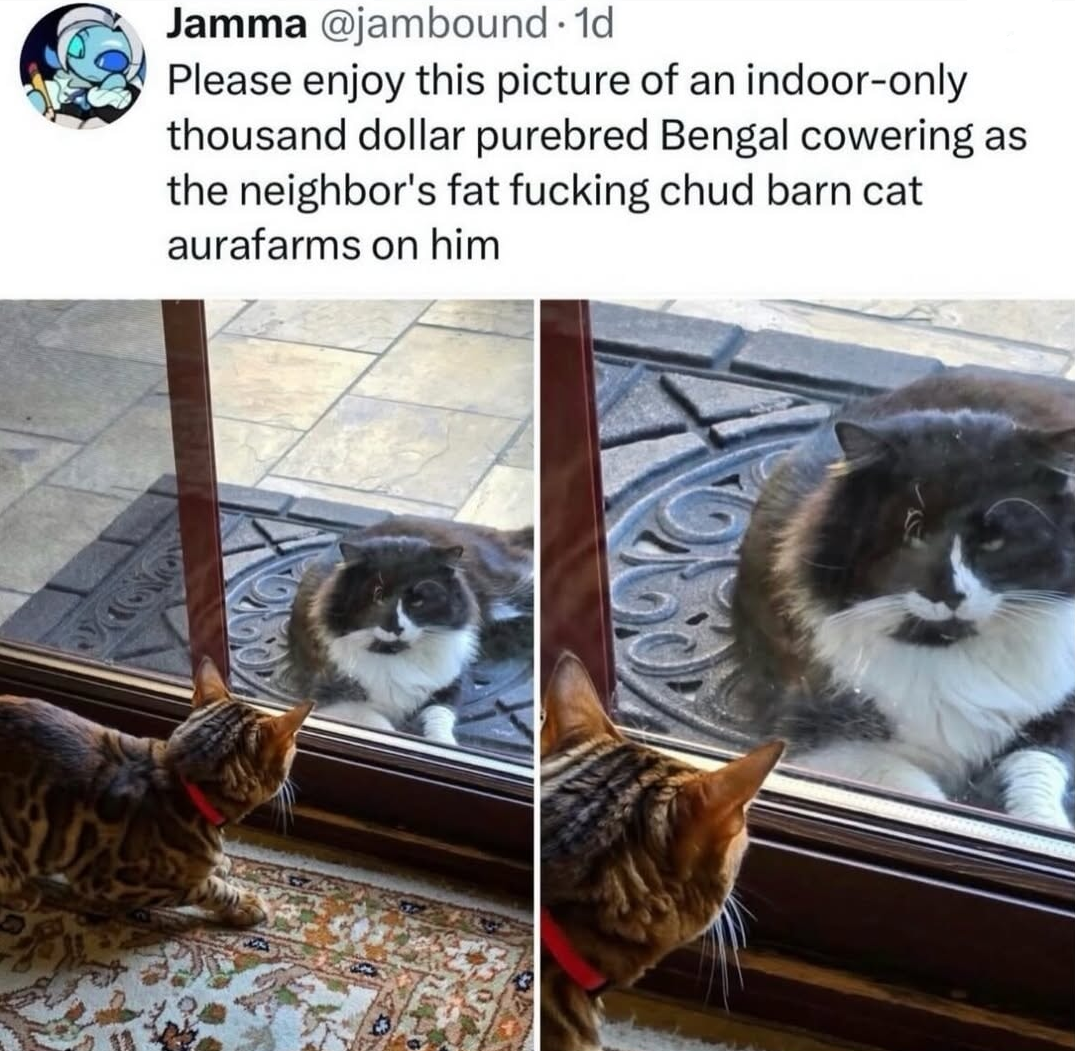
For those that don’t know why, cats are very capable hunters and absolutely decimate bird populations. Keeping cats outdoors has genuinely horrendous ecological consequences unfortunately :/Edit: this position may not be as well academically supported as I thought. For the time being I’m not sure if outdoor cats pose significant ecological risks, evaluate the paper below and do further research if you’d like to investigate the topic more yourself :)
Outdoor domestic cats and wildlife: How to overrate and misinterpret field data
Interesting!
I don’t have the scientific literacy to evaluate the quality of the paper or journal but thanks for sharing this, it seems like the idea that cats are so harmful to local wildlife may not be as well supported position as I though! Now I’m curious if there have been any meta analysis or systematic reviews since. The paper was published in 2022, which is pretty recent but it seems possible things have progressed and become more clear which would be neat
Thanks for the link! ☺️
Yes but so do foxes, birds of pray, wild cats if your country has them.
The difference is that the outdoor cat population is artificially boosted by human feeding. If millions of people started feeding foxes they would also become a problem.
I’ve had a lot of cats over the years, with a few very accomplished hunters of mice, which I constantly found beheaded in the back yard.
But as far as I know, they only killed one bird, and the murderer was so excited, that he came and got my wife and I, and led us to the scene of the crime, to brag about it. Clearly not something he did often.
I watched one cat leap into a flock of sparrows on the ground. They all flew off, and she leaped epically, and brought down a single bird, holding it under her paw, clearly not sure what to do at that point.
Suddenly a sparrow dropped to the ground about 6 feet away, and started flopping around, as if injured, and making a LOT of noise. That attracted my cat’s attention, and as she took one step toward the “injured” bird, she lifted her paw off the captured bird, and both birds flew away, leaving her empty-handed, with a VERY confused expression.
I believe the bird-killing allegation is far overblown, and birds have developed their own defensive strategies as well.
I live in the country side and have experienced the same. The hunt rodents 99% of the time. The other 1% Is divided between birds and lizards. I think rodents are just a better snack.
But in urban/suburban areas where there aren’t field mice and gophers aplenty, they do go for the birds.
Don’t get me started on ravens stalking the cats as the cats stalk gophers. They will wait for an hour for the cat to kill the gopher, then come screaming down on them, cat drops his lunch and runs, Raven gets a juicy meal. Rude.
And that’s when the ravens aren’t busy raiding song bird nests for baby bird snacks while the parents are screaming and doing their best to fight a bird 8 times their size. Rude.
Yes, so untill a couple of years ago, the RSPB even said there was no evidence outdoor cats had any affect on bird populations as cats would mostly kill injured, sick or weak birds that wouldn’t make it to a mating season anyway and noted that all the most commonly preyed on soceis of birds were actually seeing an upwards trend in population (until a couple of Karen’s literally harrased and bullied them into taking it down)
Yes
Sorry is it your position that invasive species are fine?
Known invasive species that primarily consist on kibble purchased for them by humans. There is no evidence that they have an adverse effect on bird populations. The birds they kill on birds that would have been killed by some other predator some other way.
So humans shouldbt be allowed outdoors either?
No, honestly.
Invasive how? They’ve been around for millennia and suddenly now they’re invasive?
also unlike most predators, they don’t even do it to eat. They just get off on catching and torturing other animals.
(EDIT well excuuuse me for not dressing it up in a bunch of academic speech that essentially adds up to the same thing)
I feel like thats a little bit of a simplification/anthropomorphization (which is fine obviously, its a theadiverse comment not a research paper, I just think this subject is interesting and am taking an excuse to talk about it :)
Generally prey drive is an aspect of play for animals. Most animals, especially animals domesticated for hunting related tasks like pest control, enjoy hunting and would benefit from hunting recreationally even if they were provided food. Its part of cat’s ecological niche to hunt for food, it fulfills a psychological need not just a physiological one (which is why providing your animals with enrichment is very important. Please consider your animals’ psychological needs and play with, exercise and enrich them). Dogs with high prey drive are the same way.
Cats aren’t really uniquely sadistic, there just aren’t many examples of domesticated animals with high prey drive that have all their meals provided for them AND have the ability to free roam.
If you fenced in an big area and left greyhounds (another high prey drive domesticated animal) in it while giving them enough food, they would 1000% hunt and kill bunnies, squirels, etc well beyond what would ever make sense for them to eat. Both cats and greyhounds are animals who’s ecological niche became even more hunting-centric as a product of domestication-- cats being used for rodent control, and greyhounds for hunting small game as sighthounds.
Bettas in aquaria will still form bubble nests even if they have no mates (and also hunt for anything and everything they can put in their mouth if you have a food web in your aquarium, even if you feed them adequate prepared foods, depending on their temperment). Schooling fish will school even when there are no threats, though more loosely. Animals that hunt will still want to even if their food needs are met. Performing their ecological niche and evolutionary strategy is biological fulfilment for animals and its the gold standard of enrichment for animals in captivity because it fills a psychological need.
It’s like people on social media. Not here to have a healthy debate based on facts and getting off on insults and hate.
It’s lovely, is it not?