

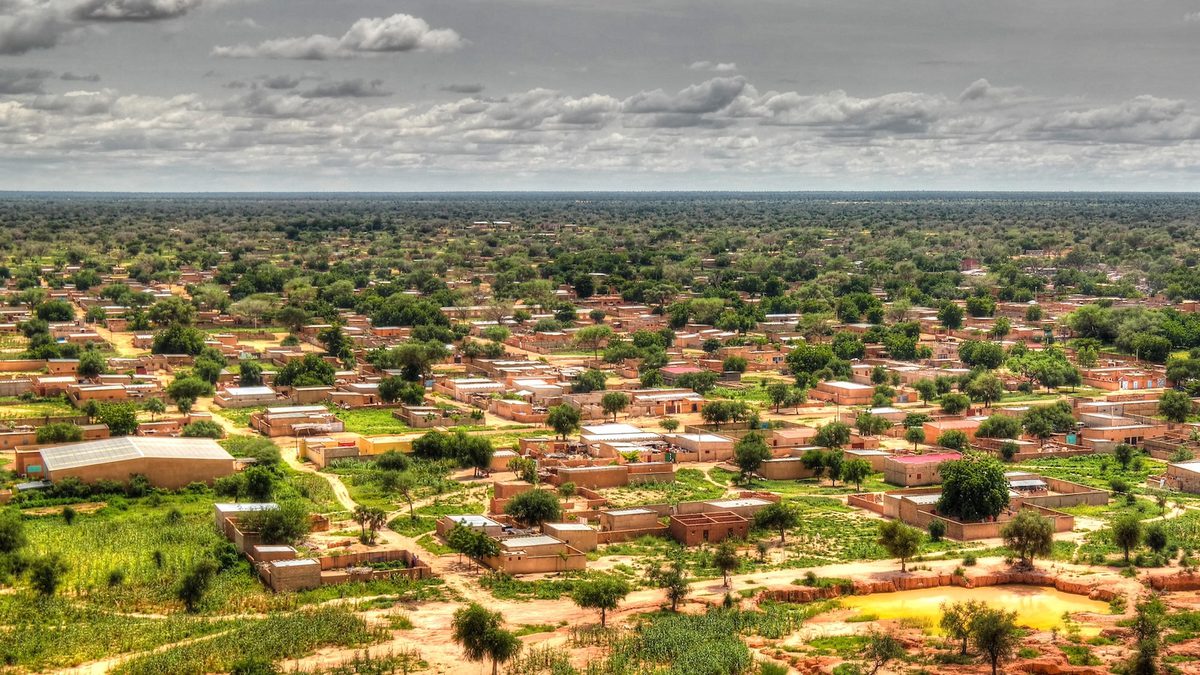
After the catastrophic droughts of the late 20th century, aquifers from Senegal to Ethiopia are refilling, water tables in Niger have risen four metres, and Lake Chad has swollen to ten times its mid-1980s size. Near-extinct scimitar-horned oryx now number over 600, and farmers have nurtured 200 million trees back onto once-bare fields.
Interesting. Indeed during the last couple of weeks I’ve been watching the African Monsoon from satellite. Best watch at sunset and few hours after.
It’s quite remarkable to see huge thunderstorms - the size of smaller countries - billow up over Chad, Niger Mali and Mauritania, even touching the mountains of Algeria (although clouds that grow that far north typically collapse into dust haboobs). Just day before yesterday a huge cloud at the northern tip of Mali - where loads of rain fell overnight according to eumetsat.int (Blended SEVIRI / LEO MW precipitation). Yesterday looking at nasa worldview (aqua modis reflectance 721) you can see damp ‘stains’ on the sand, and beginning of small pools, in normally driest parts where nobody lives (region of Erg Chech - Kreb en Naga) . A few days earlier, tracked big storms passing north of Timbuktu into Mauritania, and a week earlier also noticed loads of rain along both Eritrean and Yemen shores of Red Sea. I’m not qualified to say whether all this is ‘normal’ but it looks special to me, especially while forests burning and rivers dry up in europe - although of course the coincidence makes sense - opposite ends of same Hadley cell shifted north. So maybe hopeful for Sahel (where they’ll need to grow more food anyway, considering demographic projections).I do hope this is a good sign
Some climate change models do predict a green Sahara.
That would be poetic
The effects of these mega-storms are especially challenging in a region more used to disasters caused by the absence of rain. Niger, one of the world’s 10 poorest countries, saw tens of thousands die from famine during the late 20th century droughts. Now, it sees more deaths from floods than droughts. Fierce storms during the 2024 monsoon season inundated the capital, Niamey, and in rural areas washed away more than 150,000 mud-brick homes.
The extreme rains are causing massive floods that kill a lot of people, but overall it’s probably better to have water.
Landslides taking out entire villages. I saw an interview with a woman that lost her little boy in a landslide, not long after another landslide had destroyed much of the village. I still think about her almost every day, it’s haunting. The people paying the price are not the ones responsible.
Aha, that’s where our water went!
I 100% expect to see this, unironically, spoken by someone in the US who is insisting we invade Africa in order to “secure water”
Brought to you by the same morons who said a Greenland invasion will allow us to better support endless shrimp at Red lobster.
I wouldn’t be surprised at all.
If water previously going to Europe ends-up raining in Africa, the irony would be delightful.
I get your point is about contributions to climate change. But technically if the whole system (ICTZ + Hadley cell) shifts north, the extra rain in the desert was previously further south - over the coastal strip or ocean. It’s rather that the hot dry air that was previously descending into the mid Sahara, is now dumped over the mediterranean region.
Almost enough to make you believe in God


