

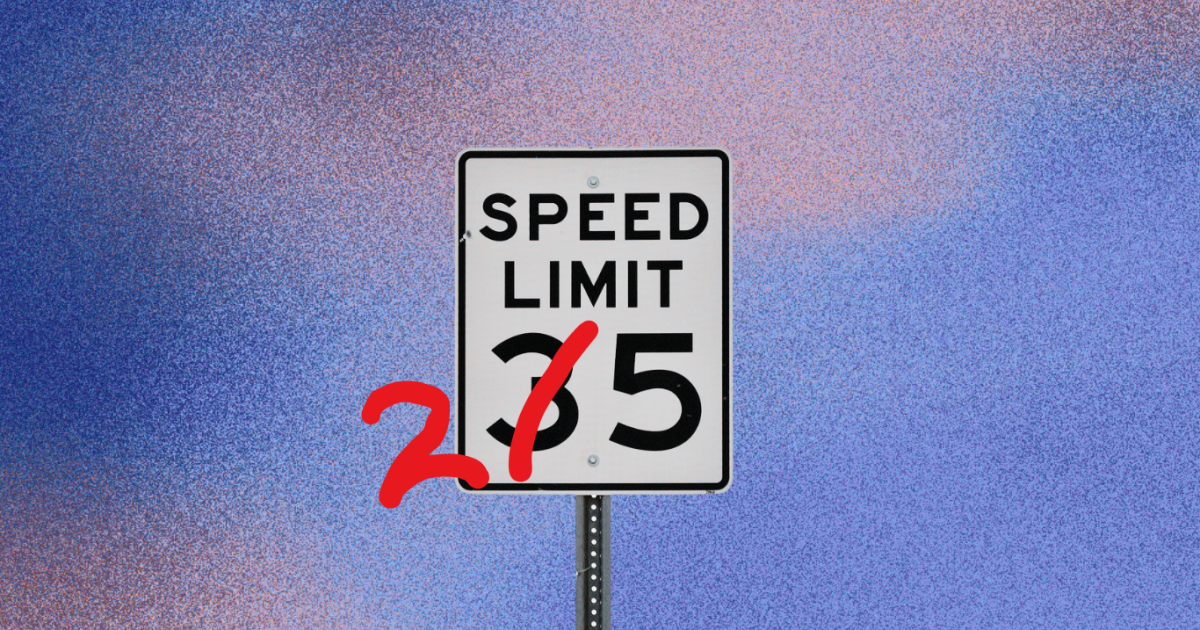
Traffic deaths on stretches of Martin Luther King Jr. Way in Seattle have doubled in the last five-year period, despite the city’s goal to reach zero traffic deaths and serious injuries by 2030.
A KUOW analysis of recent city data shows how a city-wide push to lower speed limits can improve some elements of safety – but experts say there is still work to do when it comes to slowing drivers down and keeping pedestrians safe.
I mean, good to have data that lowering speed limits does actually help. Still would be better to revamp the roads to have a safer design speed.
In the Netherlands there is a trend of lowering speeds but not enough enforcement (something with local governments not having the authority, and national police having different priorities). Not sure if any scientific data but it is empirically clear to both sides that just changing the signs is not enough - if a road feels like a 50kph road, people will continue driving 50kph. If a road is redesigned, people stop doing that.
Slower speeds result into less serious injuries and less fatal accidents, but it seems people are only willing and or able to adhere to lower speeds if the design of the road calls for that safer speed.
Seattle doesn’t really enforce traffic laws except with speed cameras and parking enforcement. Adding speed cameras would get people to start slowing down.
I’d argue it’d help too - but to add about the situation here: the reason the police is not prioritizing this is because they believe so many people would object their fines it would place a heavy burden on our justice system. A judge would have too look at all those individual streets (perhaps times 2, if the situation is different in each direction because of a side road or something). The people objecting would have a point because there are laws preventing government from doing things that are unfair to the individual. In other words, a speed camera on a big road is much more fair than a speed camera in a small street. Weird stuff.
We do have speed cameras, though–just not here.
I think going after every person doing a few over is poor use of resources and invites over-policing and bias.
That said, the vroom vroom/street racing crowd- I can’t understand how these assholes in hellcats and chargers get away with blasting all over town. Noise ordinances alone should be hitting these drivers so hard they can’t afford to continue; the speeding is bonkers too. MLK should not be a fucking race track most nights of the week.
it’s a major thoroughfare - basically you have this and I-5 to go north/south; rainier ave is much more narrow with lots of street parking (not that these things stop people speeding through;) I spend a lot of time near MLK/Othello and MLK/Alaska volunteering, I don’t think you can revamp - traffic mitigate, lane reductions etc., - this without it hurting accessibility in a substantial way. it’s already carrying a very heavy amount of traffic.
In my experience people still regularly hit 50 on MLK, I don’t have a problem with the limit set at 25 but any constriction of flow is gonna huuurt.
I mean, I don’t think usage statistics are a great way to evaluate what needs to be done to any given road. If a road has a speed limit as low as 25 mph there probably shouldn’t be more than one lane per direction.
not sure what direction you want to see…? like, yeah, I agree that’s a very low speed limit for a major artery with 2 lanes each way and a two tracks in the middle.
people ignore the speed limit regularly though.
What I mean is, if it has been decided that that road should have a speed limit of 25 mph, it clearly isn’t being thought of as a major thoroughfare. In that case the entire design of the road needs to be such that it discourages people from using it as such, instead directing and encouraging them to use other options better designed for that purpose.
this is the disconnect I struggle with - it needs to be thought of as a major thoroughfare but we’re treating it like superficially decreasing speeds will ‘fix’ it.
mitigating the road to one lane each way would be wretched, it would push even more traffic into people cutting through neighborhoods.
I don’t think there are any ‘right’ answers, just many wrong ones on this issue.